
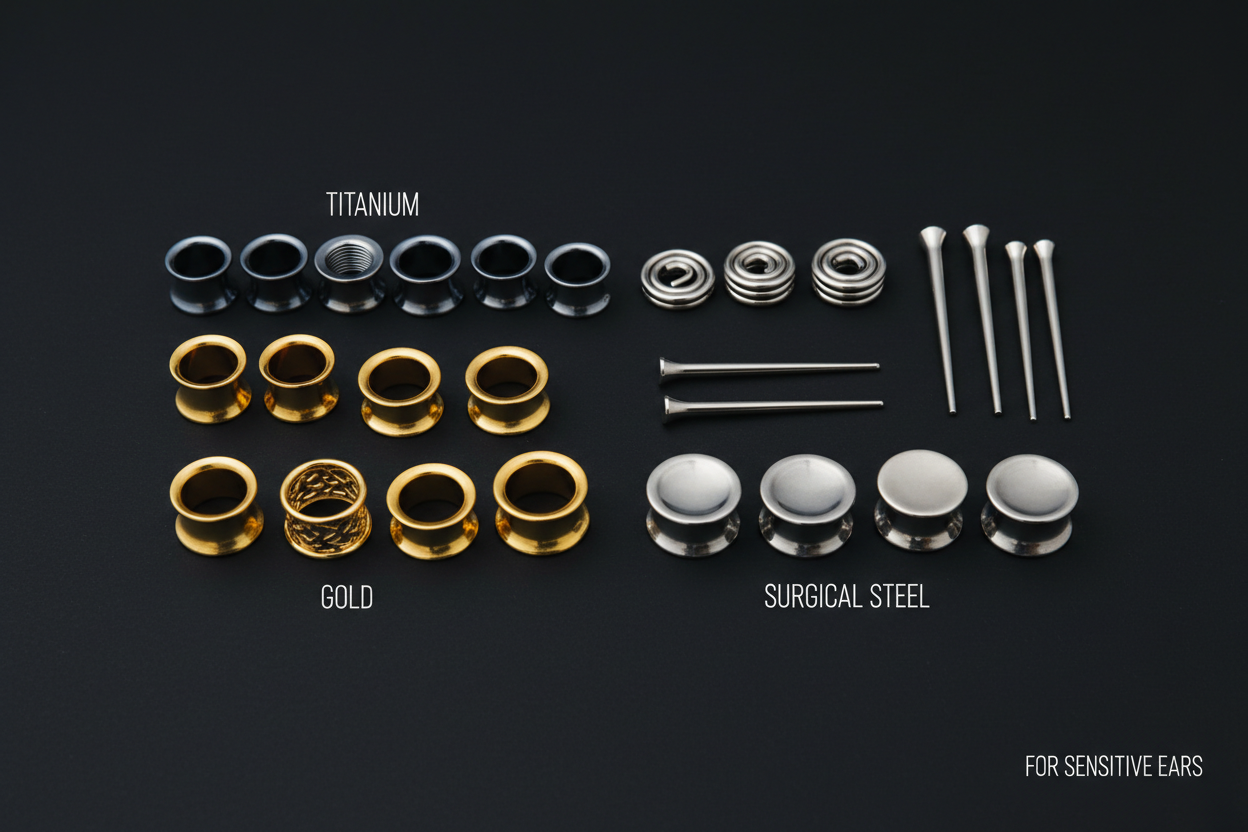
If you've ever pulled out a pair of plugs because your ears turned red, itchy, or swollen, the problem usually isn't your skin — it's your body jewelry. Body jewelry made from the wrong material is one of the most common (and most overlooked) causes of ear irritation, especially for people with stretched lobes or newer piercings. The right material can mean the difference between jewelry you forget you're wearing and jewelry you're constantly taking out.
Body jewelry refers to any piece worn in a piercing — plugs, tunnels, hangers, or rings — and its material determines how your skin reacts to it. Hypoallergenic options like titanium, niobium, and solid gold rarely cause issues, while cheap alloys, nickel-based metals, and low-grade acrylic are common irritation triggers.
Why Your Ears React to Certain Body Jewelry
Before swapping out every pair of gauges you own, it helps to understand what's actually happening. Ear irritation from jewelry usually comes down to one of three things:
- Nickel content. Many inexpensive metals contain trace nickel, which is the single most common cause of contact dermatitis in piercings.
- Porous materials. Some acrylics, resins, and low-quality plastics have microscopic pores that trap bacteria and oils, leading to buildup, odor, and infection.
- Poor plating. Gold-plated or coated jewelry looks fine at first, but the plating wears down with sweat, lotion, and daily friction — exposing the base metal underneath, which is often what's actually irritating your skin.
If you've ever had a piece of jewelry that was fine for months and then suddenly started bothering you, plating wear is almost always the culprit.
The Best Materials for Sensitive Ears
Titanium Ear Tunnels
Titanium ear tunnels are considered the gold standard for sensitive skin. Implant-grade titanium (ASTM F136) is inert, non-porous, and contains no nickel, which makes it the go-to choice for fresh piercings, new stretches, or anyone who reacts to almost everything else. If you've struggled with irritation from multiple materials in the past, this is usually the first swap worth making.
Gold Gauges and Gold Plugs for Ears
Solid gold gauges — not gold-plated — are naturally hypoallergenic and tend to be one of the more comfortable long-term wear options. Gold plugs for ears and gold tunnels also hold their color and shine far longer than plated alternatives, which matters if you wear your jewelry daily. The trade-off is cost, but for lobes prone to sensitivity, it's often worth the investment for pieces you'll wear constantly.
Surgical Steel and Stainless Steel
Surgical-grade stainless steel is a solid mid-range option for most people, though it's worth noting that "surgical steel" isn't a regulated term — quality varies by supplier. If you've had mild reactions to steel jewelry before, that's often a sign to move up to titanium.
Organic and Natural Materials
Wood, stone, and horn plugs are popular for their look, but they're porous by nature. They can work well for fully healed, well stretched ears with good hygiene habits, but they're not the best starting point if your ears are still sensitive or healing.
Choosing Body Jewelry for New vs. Healed Piercings
New piercings and fresh stretches need the most inert, non-porous material you can find — titanium or solid gold, no exceptions. Once your ears are fully healed, you have more flexibility to experiment with saddle hangers, acrylic gauges, or statement pieces like skull plugs and heart tunnels, since a healed piercing is far more forgiving.
For anyone actively stretching, ear weights for stretching should also be chosen with the same care. A heavy, porous, or low-grade weight sitting against tender tissue for hours is a common cause of blowouts and irritation — the material matters just as much as the size.
Signs Your Body Jewelry Material Is the Problem
- Redness or itching that appears only after wearing a specific pair
- Skin that reacts to gauge plugs in ear but not to other jewelry
- Bumps, discharge, or a persistent odor around the piercing
- Irritation that improves within days of switching materials
If you notice any of these, the fix usually isn't more cleaning — it's a material change.
How to Shop Smarter for Sensitive Ears
- Look for "implant-grade," "ASTM F136," or "solid" in the product description — avoid vague terms like "steel-tone" or "gold-look."
- Avoid unlisted or unclear materials, especially on very cheap plugs and tunnels.
- Rotate in titanium or solid gold pieces for daily wear, and save porous or plated jewelry for occasional use.
- If you're building out a stretching kit, prioritize inert materials for every stretcher, not just your everyday plugs.
FAQ: Body Jewelry for Sensitive Ears
What is the most hypoallergenic body jewelry material?
Implant-grade titanium and solid gold are the two most hypoallergenic options, since both are nickel-free and non-reactive for the vast majority of wearers.
Can gold-plated jewelry cause an allergic reaction?
Yes. Once the plating wears down, the base metal underneath — often a nickel alloy — comes into direct contact with your skin, which is a common delayed cause of irritation.
Why do my ears itch with some plugs but not others?
This is typically a material-specific reaction, most often linked to nickel content, low-quality alloys, or porous materials trapping bacteria against the skin.
Is stainless steel safe for stretched ears?
Surgical-grade stainless steel works for many people, but since the term isn't strictly regulated, quality varies. If you've had reactions before, titanium is the safer bet.
How do I know if my ear tunnels are causing an infection?
Persistent redness, swelling, discharge, or odor that doesn't improve with cleaning usually points to either a porous material or an unclean piece — switching to a non-porous option is the first troubleshooting step.
Are acrylic plugs and tunnels bad for sensitive skin?
Lower-quality acrylic can be porous and trap bacteria, which makes it a less ideal choice for anyone prone to irritation, especially during initial healing.
Can I wear gold tunnels every day?
Solid gold tunnels are one of the better daily-wear options, since gold is naturally hypoallergenic and holds up well to everyday exposure like sweat and lotion.
What body jewelry material is best for a brand-new stretch?
Titanium is the safest choice for a new stretch, since it's non-porous, inert, and the least likely material to interfere with healing.
Final Thoughts
The material behind your body jewelry matters just as much as the design — sometimes more. If you've been blaming your skin for irritation that's actually coming from low-quality metal or worn-down plating, switching to titanium or solid gold is often the simplest fix. At PunkPlugs, our gold gauges, titanium ear tunnels, and full range of plugs and tunnels are built with materials that hold up to daily wear, so you can focus on your style instead of your symptoms. Explore the collection at PunkPlugs.com and find the pieces your ears will actually thank you for.
Share:
PunkPlugs Returns & Exchanges: Complete Guide
Gauged Ear Jewelry Sizing Chart: How to Find Your Perfect Fit